
Did you know that before there were screens, there was sound — and before there were texts, there were taps? 📞
In the early 1830s, long before anyone double-tapped a post, an artist named Samuel Morse turned grief into genius. After losing his wife and missing the news of her death because messages traveled painfully slow, he set out to fix the problem. The result? A brand-new language built from nothing but dots, dashes, and determination.
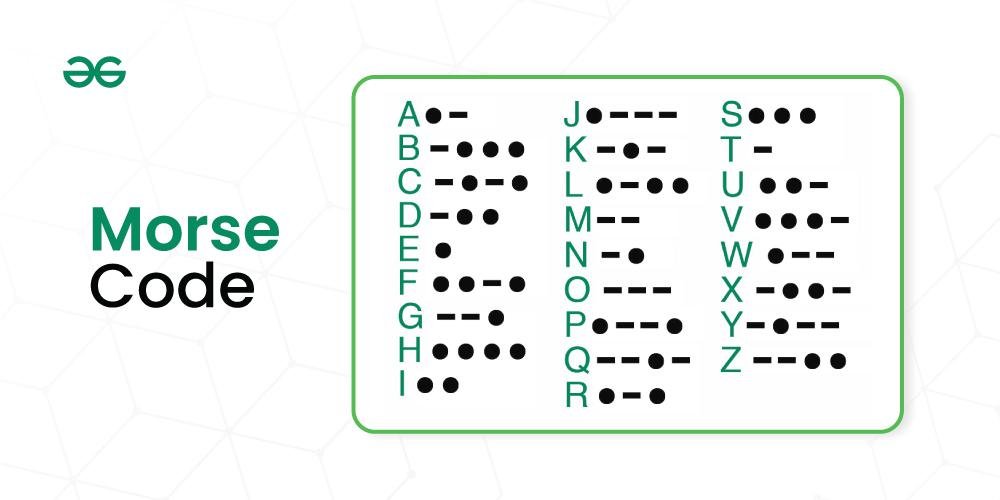
⚙️ The Birth of Beeps
Imagine inventing an alphabet that anyone could send without speaking. That was Morse Code: every letter became a short or long pulse — a “dot” or a “dash.” The code moved through telegraph wires like whispers made of lightning. You could literally send a message across oceans faster than a horse could blink.
By the mid-1800s, telegraph offices buzzed with energy. “… — …” (SOS) became a lifeline at sea. The world suddenly felt smaller — and, honestly, a bit louder. Morse Code didn’t just connect people; it changed time itself. Messages that once took days now took seconds.
💌 When Love Spoke in Dots and Dashes
You might think Morse was just for war and weather reports, but it also carried secrets of the heart. In the late 1800s, lovers sent coded messages through telegraph lines, hiding emotions behind beeps.
There were stories of telegraph operators falling in love through code alone — their fingers learning each other’s rhythm before their eyes ever met. Think of it as the original online dating, minus the catfishing. 💅
⚔️ A Language of Survival
During both World Wars, Morse became the backbone of global communication. Soldiers used it to send urgent intel. POWs used it to whisper hope through the walls — one tap for “A,” two for “B,” and so on. It was a lifeline disguised as noise.
One famous case is that of Jeremiah Denton, an American pilot held captive during the Vietnam War. During a forced interview, he blinked “TORTURE” in Morse Code to secretly tell the U.S. what was happening. That’s right — he blinked his message. 🫡
A language made of beeps and blinks saved lives.
🌊 The Code That Refused to Die
Even after telegraphs faded and phones took over, Morse didn’t disappear. Pilots still use it in aviation beacons. Ships still rely on it in emergencies. Some modern apps even let you text in Morse just for fun — because apparently, we can’t resist a good retro comeback.
Think about it: every time your phone pings or your smartwatch vibrates in rhythm, you’re experiencing the ghost of Morse. Technology didn’t erase it — it just rebranded it. 💫
🧩 Morse in Pop Culture
From Hollywood thrillers to indie video games, Morse pops up whenever silence needs a voice. In Interstellar, messages cross dimensions through blinking lights. In Stranger Things, kids use flashing bulbs to talk across worlds. And on TikTok, some creators remix the pattern into beats. It’s proof that the language of rhythm never really left us.
Even K-pop fans have used Morse patterns in fandom edits (because why not?), turning “SOS” into “Stan Our Stars.” 😎
🔦 The Science of Simplicity
Here’s what makes Morse brilliant: it’s based on timing, not technology. A short beep lasts one unit; a long beep lasts three. Spaces between letters? One unit. Between words? Seven. You could tap it, blink it, flash it, or hum it.
It’s the universal rule of human connection — if you can feel a rhythm, you can share a message.
That’s why scientists still use Morse-like signals in deep-space communication. It’s simple, adaptable, and indestructible — the ultimate backup plan for talking across galaxies. 🪐
💬 The Legacy in Our Hands
We may not think in dots and dashes anymore, but we still speak in short bursts — text messages, tweets, emojis. Our phones have just become modern telegraphs, buzzing instead of beeping. We shorten everything, create slang, and invent new codes for every app. That’s Morse’s spirit living on — minimalist, clever, and deeply human.
Next time your phone buzzes twice and you instantly know what it means — that’s communication without words. That’s Morse reincarnated.
🌍 A Final Dot, A Final Dash
So yeah — Morse Code isn’t dead. It just traded wires for Wi-Fi, sparks for screens.
It’s a reminder that connection doesn’t need luxury — it needs rhythm, patience, and intention.
Every dot is a heartbeat. Every dash is a breath. Together, they form the oldest kind of message — “I’m here. Are you listening?”