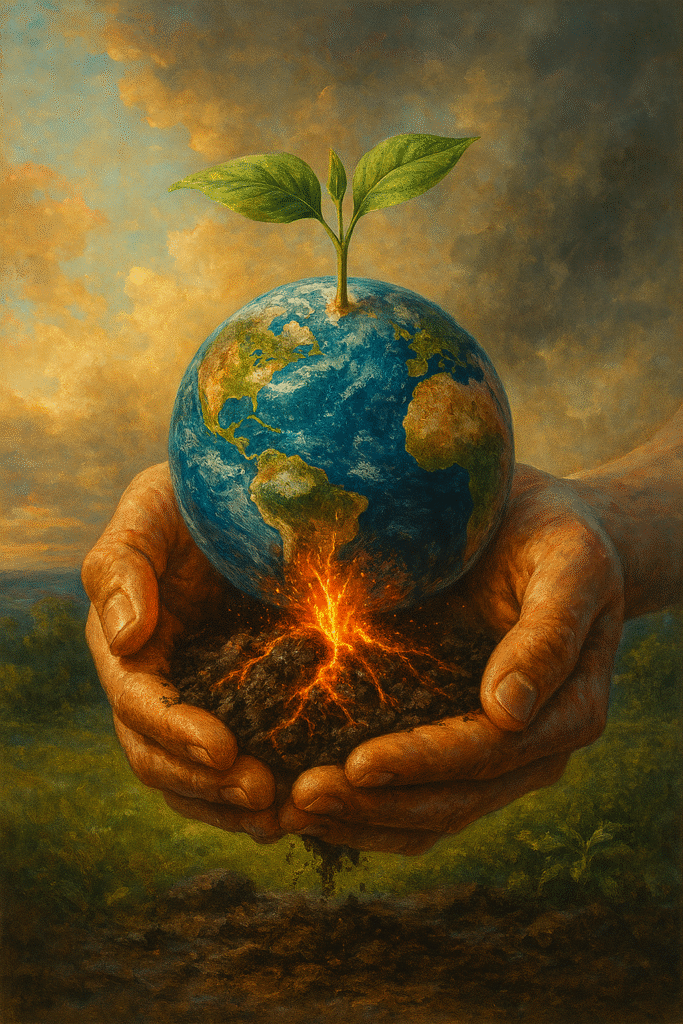
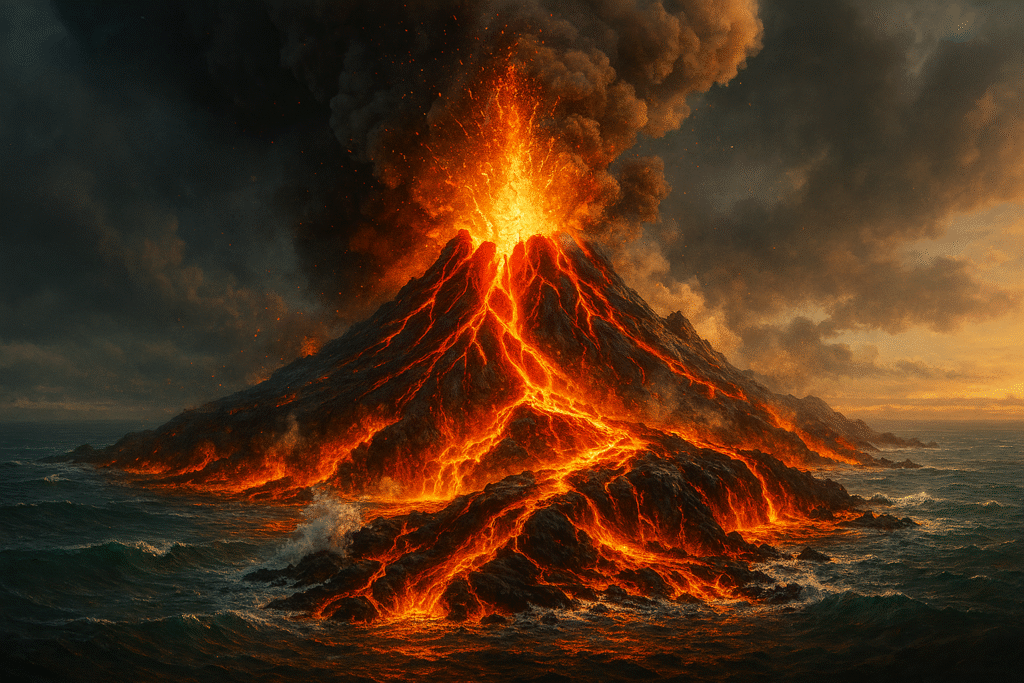
I bet you didn’t know that when most people hear the word “volcano,” they think chaos, danger, and disaster movies with bad CGI. But here’s the twist: volcanoes are also creators. Beneath their fiery outbursts lies one of Earth’s oldest secrets — the power to build new worlds from destruction. This is the story of how every eruption rewrites the planet’s map, one island at a time. Did you know that every time a volcano erupts, the Earth might be giving birth to something new? 🌍🔥We often picture volcanoes as symbols of destruction — explosions, ash clouds, rivers of fire. But beneath the chaos, they’re nature’s most dramatic architects. They erase landscapes, yes, but they also sculpt brand-new ones. In the long story of Earth, volcanoes aren’t villains — they’re the writers of every new chapter. 🌋 Fire That Creates Instead of Destroys Volcanoes form when molten rock, or magma, rises from deep inside the Earth’s mantle. When it breaks through the crust, it becomes lava, spreading across land and solidifying as it cools. That process — violent, unpredictable, yet precise — is literally how continents grow. Take Hawaii, for example. The entire island chain exists because of a volcanic “hot spot” under the Pacific Ocean. Over millions of years, lava from underwater eruptions piled up, cooled, and hardened — creating one island after another. 🌴 That means every beach selfie ever taken in Honolulu? Courtesy of liquid fire that cooled down just right. 🔥📸 And it’s not just Hawaii — Iceland, Japan, Indonesia, and even parts of Italy were shaped by ancient volcanoes. The Earth is constantly recycling itself: burning, cooling, growing, and repeating the cycle like a cosmic compost bin. 🧱 How Lava Builds Land (The Slow Magic) Lava looks chaotic, but it’s actually methodical. When it pours into the sea, the contrast between the molten rock (about 2,000°F) and the water causes a violent hiss of steam. Then, slowly, it cools into rock. Layer by layer, over decades or centuries, those hardened flows stack up like bricks. Eventually, what began as underwater eruptions becomes something you can stand on — new land. The planet literally expands beneath our feet. In 2018, a submarine volcano called Hunga Tonga-Hunga Ha’apai erupted in the South Pacific, forming a new island almost overnight. At first, scientists thought it would erode within months. Instead, it lasted for years — home to birds, plants, and even microbial life. That’s the wild thing: the Earth can hit “destroy,” and somehow the aftermath becomes a launchpad for life. 🌱 The Fertility of Fire Volcanic soil is some of the most fertile on Earth. 🌾When lava breaks down over time, it releases minerals like iron, magnesium, and potassium — nutrients that supercharge plant growth. That’s why regions with volcanic activity, like Java or Naples, are agricultural gold mines. Where there’s ash, there’s abundance.Coffee, bananas, and even grapes for some of the world’s best wines grow in volcanic soil. So yes, your morning espresso might have a fiery past. ☕🔥 It’s nature’s paradox: destruction makes creation possible. 🗺️ When Volcanoes Rewrite the Map Volcanoes don’t just build islands; they literally redraw political borders. In 1963, the Surtsey eruption near Iceland gave birth to an entirely new island. It was such a big deal that the United Nations declared it a protected natural lab. Scientists still study it to this day — it’s the only place on Earth where you can watch an ecosystem form from zero. What’s mind-blowing is how fast it happened: one day there was open ocean, and within weeks there was land. Not a metaphorical “new start” — actual new ground on the map. Every eruption is a reminder that the Earth is not finished. It’s still a work in progress, reshaping itself like a sculptor that never stops carving. 🌋 A Symphony of Pressure Behind every volcano is a symphony of geological pressure — plates colliding, crust cracking, gases escaping. It’s messy, but it’s art. Without volcanoes, the atmosphere we breathe wouldn’t exist. Billions of years ago, volcanic outgassing released water vapor and carbon dioxide into the air, creating the foundation for Earth’s climate and oceans. In short: no volcanoes, no breathable air, no oceans, no you reading this right now. 🤯🌬️ We owe our very existence to explosions. 🌍 Modern Volcanoes: The Artists Still at Work Today, volcanoes are still creating land. Kīlauea in Hawaii constantly pours new rock into the Pacific. Mount Etna in Sicily adds inches to Italy every decade. Even underwater volcanoes, invisible to us, are busy building the next generation of islands. Some scientists even call volcanoes the “heartbeat of the planet.” They release pressure, recycle rock, and keep Earth’s crust flexible instead of brittle. Without them, the planet would eventually crack — a dramatic way of saying, we actually need the chaos. So, next time you see an image of glowing lava, remember: that’s the planet’s version of self-care. A little meltdown, followed by renewal. 🧘♀️🔥 🪨 The Human Side of the Flame Cultures across the world have always respected volcanoes — and for good reason. In Hawaiian mythology, the goddess Pele is the spirit of lava, destruction, and creation. In Japanese culture, Mount Fuji is both sacred and symbolic of rebirth. Humans instinctively recognize what volcanoes represent: transformation.They teach us that endings and beginnings can happen in the same breath — that fire can be both cruel and creative. ✨ From Ashes to Awe Every volcano tells the same story: you can’t make new ground without shaking the old.They remind us that creation and destruction aren’t opposites — they’re twins. So yes, volcanoes destroy. They also plant the seeds of continents, turn ash into soil, and write poetry in magma. Every eruption says, “The world isn’t over — it’s just evolving.” Maybe that’s why, deep down, we’re drawn to fire. Because we recognize ourselves in it. The Earth’s greatest explosions aren’t endings. They’re invitations — to grow, to rebuild, and to rise again, even if